
Essential Vendor Agreement Review Checklist
Table of Contents
- Know What You’re Buying
- Decoding the Real Cost of Vendor Agreements
- Holding Vendors Accountable for Performance
- Protecting Your Data and Security Interests
- Liability Limits and Insurance Coverage
- Exit Rights and Termination Terms
- Intellectual Property and Usage Rights
- Dispute Resolution and Governing Law
- Essential Vendor Agreement Review Checklist
- Common Mistakes in Vendor Agreement Review
- Final Thoughts
- Know What You're Buying
- Decoding the Real Cost of Vendor Agreements
- Holding Vendors Accountable for Performance
- Protecting Your Data and Security Interests
- Liability Limits and Insurance Coverage
- Exit Rights and Termination Terms
- Intellectual Property and Usage Rights
- Dispute Resolution and Governing Law
- Essential Vendor Agreement Review Checklist
- Common Mistakes in Vendor Agreement Review
- Final Thoughts
Every year, businesses lose thousands of dollars to poorly negotiated vendor agreements. The issue isn’t bad vendors. The issue is often missing important vendor agreement terms buried in the contract. Utilizing a vendor agreement checklist helps you identify these issues before they turn into costly errors. This guide reviews essential vendor contract terms to protect your business.
Know What You’re Buying
Vendor Agreement Review Process:
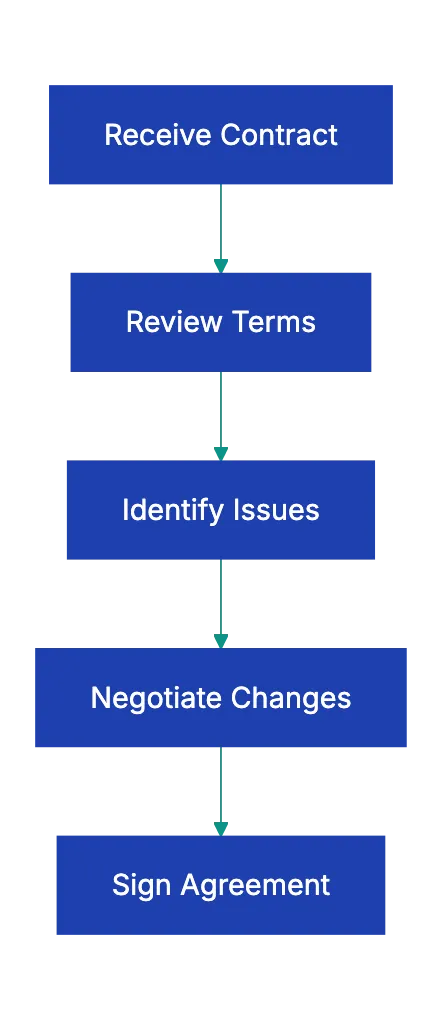
Vendor disputes often arise from unclear deliverables. Vague language like “consulting services” or “IT support” leaves too much room for interpretation. Ensure the contract spells out exactly what you’re getting. Look for specific deliverables with measurable outcomes. If you’re buying software setup, the contract should list which modules get installed, how many users get trained, and what documentation you receive. For physical products, specifications matter. Instead of “office furniture,” you want “Herman Miller Aeron chairs, size B, graphite finish, quantity 25.” Service contracts need similar precision. An IT support agreement should specify response times for different priority levels, not just promise to “respond promptly.” The difference between a two-hour response and a two-day response can mean lost revenue.
Acceptance criteria protect you from paying for work that doesn’t meet your standards. Contracts should detail acceptance/rejection procedures. Does the vendor get to try again? How many times? What if they still can’t meet the standard? Without clear acceptance criteria, you might end up stuck paying for substandard work because the contract says you agreed to accept whatever they delivered.
Decoding the Real Cost of Vendor Agreements
A vendor contract review should dig into all the potential costs you might face. Setup fees, training charges, customization costs, ongoing support fees, and shipping can easily double the apparent price. I’ve seen software contracts where the listed subscription fee was $500 per month, but mandatory setup and training added another $15,000 upfront. This impacts a small business budget.
Pricing structure matters as much as listed numbers. Is this a fixed price that won’t change during the contract term? Or is it variable based on usage, headcount, transaction volume, or other metrics? Variable pricing isn’t necessarily bad, but you need to understand the formula and whether there are caps. A contract that charges per user might seem reasonable until your team grows, and suddenly you’re paying triple what you budgeted. Check for automatic escalation clauses. Many vendor agreements include annual price increases tied to inflation indexes or simply stated as a percentage. A three percent annual increase might sound modest, but over a five-year contract, that compounds to nearly sixteen percent more than your starting price.
Volume discounts should apply automatically. You shouldn’t have to remember to ask for a discount when you hit a threshold. The contract should spell out the breakpoints and confirm that pricing adjusts automatically when you cross them.
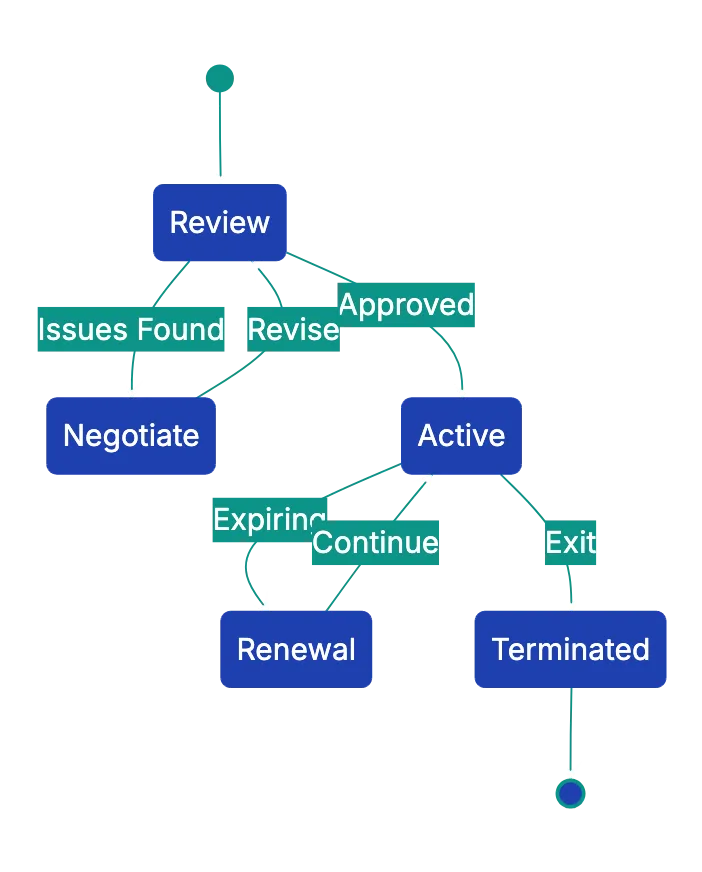
Contract Lifecycle States:
Holding Vendors Accountable for Performance
Service level agreements create obligations. Without them, a vendor’s commitment to provide “reliable service” or “quality support” is just marketing talk. An SLA specifies measurable thresholds like 99.9% uptime, response times within specific windows, or resolution times for different problem categories, but the SLA only matters if there are consequences for missing it. Your vendor contract review checklist should verify what remedies you get when performance falls short.
The most common remedy is service credits, a critical vendor contract review point where the vendor refunds a portion of your fees when they miss performance targets. The credit structure should be proportional to the harm. If uptime drops below the threshold, you should receive meaningful compensation, not a token gesture. A five percent credit for a full day of outage barely scratches the surface of lost productivity and revenue. Better contracts include escalating credits that increase as performance gets worse, and termination rights if performance problems persist.
Reporting requirements give you the data to enforce SLAs. Vendors should provide clear performance reports. Monthly reports are standard for ongoing services. Without reports, relying on memory is unreliable.
Protecting Your Data and Security Interests
Data ownership seems obvious until you read the fine print. If a vendor creates customer records, product designs, or business intelligence using your information, who owns that work product? Many contracts favor the vendor, granting them rights over your data. Your supplier agreement checklist should confirm that you own all data you provide to the vendor and all work product they create specifically for you.
Data protection requirements depend on what information the vendor handles. If they process customer data, payment information, health records, or other sensitive material, you need specific security commitments:
- Encryption standards for data at rest and in transit
- Access controls that limit who can view your information
- Certifications like SOC 2, ISO 27001, or industry-specific standards
- Independent verification that the vendor follows real security practices
The end-of-contract data provisions often get overlooked until it’s too late. What happens to your data when the relationship ends? You want a commitment that the vendor will return or securely delete all your data within a specific timeframe, typically thirty to ninety days. The contract should also address the format for data return. Getting your customer database back as a PDF is useless. You need it in a standard, usable format like CSV or through an API export.
Cyber insurance and breach notification are relatively new additions to vendor agreements, but they’re increasingly important. Does the vendor carry cyber liability insurance adequate to cover potential damages from a data breach? What’s their commitment for notifying you if your data is compromised? Waiting weeks to learn about a breach can turn a manageable problem into a disaster.
Liability Limits and Insurance Coverage
Vendor agreements limit liability. Ensure limits are reasonable based on potential harm. Many contracts cap liability at the amount you paid in the last twelve months or some other formula tied to contract value. For a $5,000 annual contract, that might mean your maximum recovery is $5,000 even if the vendor’s failure costs you $50,000 in lost revenue or remediation expenses.
Though difficult, negotiating higher liability caps should be part of your vendor contract review process, along with carving out exceptions for specific harms. Many businesses successfully exclude data breaches, gross negligence, or intellectual property infringement from the general liability cap. The vendor’s liability for leaking your customer database should not be limited to your subscription fee.
Insurance offers backup recovery. The vendor should carry:
a. General liability insurance b. Professional liability insurance (also called errors and omissions) c. Cyber liability insurance
The contract should specify minimum coverage amounts and require the vendor to provide proof of insurance annually. If the vendor is performing work at your location, workers’ compensation coverage protects you from liability if their employee gets injured on your property.
Indemnification clauses address who pays when third parties make claims. You want the vendor to indemnify you (defend and pay damages) for claims arising from their negligence, their breach of the contract, or their infringement of someone else’s intellectual property. If the vendor’s software violates a patent and you get sued for using it, their indemnification obligation means they handle that lawsuit and pay any settlement or judgment.
Exit Rights and Termination Terms
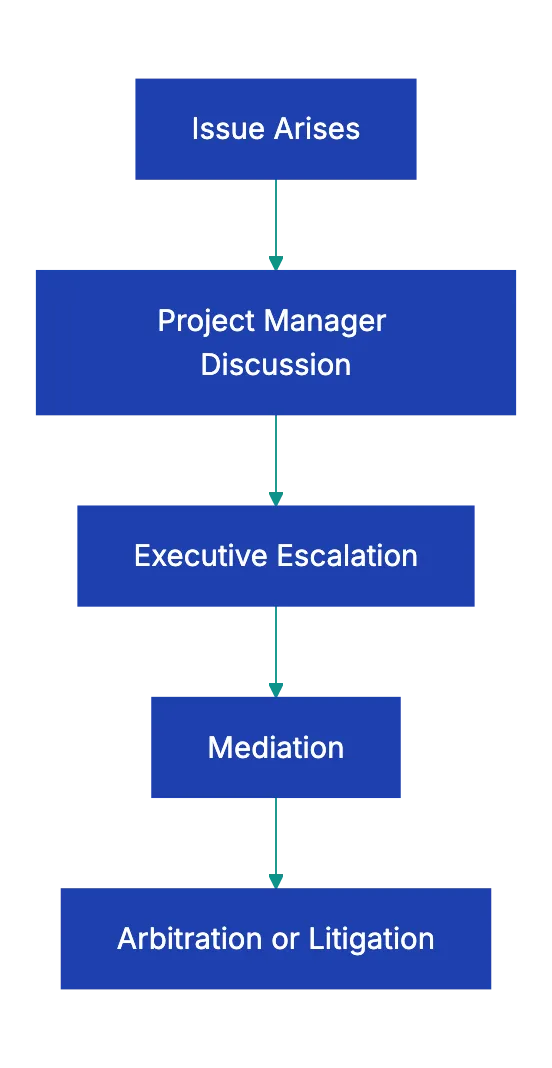
Dispute Resolution Escalation Path:
Bad vendor relationships waste money and cause issues. During your vendor contract review, ensure that your agreement includes reasonable exit rights. Termination for convenience lets you end the relationship without proving the vendor did anything wrong. You just decide it’s not working out and provide the required notice period, typically thirty to ninety days. Not all contracts include this right, and vendors often reisst it, but it’s worth negotiating, especially for longer-term agreeemnts.
Terminate for cause when the vendor breaches materially. The key details are what counts as a material breach, how long the vendor has to fix the problem (the cure period), and whetheer the breach has to be ongoing or a single failure is enough. A thirty-day cure period is common for fixable problems like missed performance targets. Unfixable breaches like fraaud or data theeft should allow immeditae termination.
Transition assistance stops the vendor from holding you hostage. The contract should require the vendor to cooperate with transferring servicss to a replacement provider, provide access to your data in usable fotmats, and retur any materials or equipment. Some contracts specify a transition period where the venndor continues reduced services while you migrate to an alternative. Without these provisions, a hostile vendor can make your exit far more painful and exprnsive tha necessary.
Early terminattion penaltie appear in many vendor agreement, especially those with discounted pricing for longer commitments. If you commit to three years at a reduce ratte, the vendor wants compensation if you terminate early. These penalties should be reasonabl and ideally decrease over tije. Paying the full remainin contract value as a penalty essentially means you can’t terminate early at all, which defeast the puurpose of having termination rights.
Intellectual Property and Usage Rights
Custom work product creates IP ownership questions. If you pay a vendor to develop software, create marketing materials, design processes, or build anything specifically for you, you should own it. Default copyright gives ownership to vendors unless transferred to you. Look for claer assignment language that gives you all rights, title, and interest in custom deliverables.
License restrictions affect how you can use what you paid for. Even if you own the work product, there might be limitations. Can you modify it? Can you use it for multiple businness untis or only the division that signed the contract? Can you share it with contractors or partners? If the vendor built your website, can you move it to a different hosting provider, or does their license restrcit where you can run it? These restrictions might be buried in exhibits or referenced documents, so your supplier agreemeent checklis should include reviewwing all attachments and incorporated terms.
Third-party component nee attention in technology contracts. If the vendor’s deliverable includes open source code, libraries, or other third-party materials, what are the licensing terms for those components? Some opne source licenses have requirements that could affect your busines. The contract should warrant that all third-pwrty components are properly licensed and that you use won’t violate anyon’s rights.
Dispute Resolution and Governing Law
Escalation procedures gvie problems a channce to get solved before they become lawsuits. A good contract specifies tgat disputes start wtih the project managers, then escalate to executives, then to formla mediation or arbitration if the business people can’t resolve them. This staged approach solves most problems at lower cost and with less damage to the relationship than immediately jumping to litigation.
Mediation involves a neutral party to facilitate agreement. It’s faster and cheape than litigation, and it often preserves enough goodwill that the business relationship can cotninue. Arbitration is more formal, where an arbitrator hears evidence and makes a binding decision. It’s usually faster than court, but you give up your right to appeal except in very limited circumstances.
Governing law and venue determine which state’s laws apply and where any lawsuit gets filed. For a vendor in California selling to a buyer in New York, should a dispute be governed by California law or New York law? Should it be filed in California courts or New York courts? As the buyer, you want your home jurisdiction for both. Fighting a lawsuit across the country costs more and puts you at a disadvantage. Many vendor contracts specify the vendor’s home jurisdiction because they wrote the contract, but htis is negotiable. A compromise is to specify that each party can sue in thier own jurisdiction, or to choose a neutral location if both parties are sophisticated enough to care.
Essential Vendor Agreement Review Checklist
Before signing your next vendor contract, verify these important elements. This table summarizes the essential vendor agreement terms to check:
| Category | What to Verify | Why It Matters |
|---|---|---|
| Deliverables | Specific descriptions with measurable outcomes | Vague scope leads to dispuutes about what was promieed |
| Acceptance Criteria | Clear standards and rejection procedures | Protects you from payin for substandard work |
| Total Pricing | All fees including hidden costs | Prevents budget surprises from add-on charges |
| Price Increases | Caps and triggers for escalation | Controls long-term cost growth |
| Performance Standards | Measurable SLA thresholds | Creates enforceable quality commitments |
| Performance Remedies | Credits or termination rights for missed SLAs | Gives you recourse when vendor fails to perform |
| Data Ownership | Clear confirmation you own your data | Prevents vendor from claiming rights to your information |
| Security Standards | Specific protections and certifications | Reduces risk of data breaches |
| Data Return | Format and timeline for exit | Makes sure you get usable data back when contract ends |
| Liability Cap | Adequate limits for potential harm | Provides meaningful recovery if vendor causes damagge |
| Insurance Requirements | Coverage types and minimum amounts | Creates backup source of compensation |
| Termination Rights | For convenience and for cause | Prevents being trapped in bad relationship |
| Transition Assistance | Vendor cooperation during exit | Avoids vendor hostage situations |
| IP Ownership | Assignment of custom work produc | Confirms you own what you paid to create |
| Dispute Resolution | Escalation and venue terms | Controls cost and location of disputes |
This vendor contract review checklist isn’t exhaustive, but it coovers the terms that most often cause problems for buyers. Each business has specific concerns based on industry, the type of product or service being purchased, and the strategic importance of the vendor relationship. Important vendors that would significantly disrup your business if they failed deserve more thorough review than commodity suppliers with easy substitutes.
Common Mistakes in Vendor Agreement Review
Many businesses focus exclusively on price and ignore risk allocation. A low price frmo a vendor with terrible liability terms, weak performance standards, and difficult exit provisions often costs more in the long run than paying a premium for a well-structured agreement. The vendor agreement terms to check extend far beyoond the fee schedule.
Another common mistake is failing to read incorporateed documents. The signature page might reference the vendor’s standard terms and conditions, acceptable use policy, service level agreement, and data processiing addendum. All of those documents become part of your contract, and they often contain the most important (and most vendor-friendly) provisions. Make sure these are part of your vendor contract review checklist. Your vendor contract review checkpist should include obtaining and rrading every referenced document before signing.
Businesses also tend to assume they can fix problems later through relationship management. When things go wrong, the relationship won’t save you. The contract terms control what happens in a dispute. No account manager can override contract terms. Get the terms right before signing, because changing them later requires the vendor’s agreement, and they have no incentive to give you better terms once you’re locked in.
Final Thoughts
Review vendor agreements to avoid costly issues. The terms you negotiate affect not just what you pay, but whether the vendor delivers what you need, how you handle problems when they arise, and whether you can exit the relationship if it’s not working. A systematic vendor agreement review checklist enables you to spot unfavorable terms while changes can still be made. Pay attention to deliverable definitions, total pricing including all fees, performance standards with meaningful remedies, data ownership and securrity, liaiblity limits and insurance, exit right, intelllectual property ownership, and dispute resolution terms. These provisions determine wheether your vendor relationshi will be productive or prroblematic. Before signing your nrxt vendor agreemeent, take the time to review it thoroughly against a complete chhecklist, or upload it to Revdoku for an automated review that flags risky terms and suggests improvements. The hour you sepnd reviewing now prevents months of headachse later.
Frequently Asked Questions
What should I prioritize when reviewing a vendor agreement?
Focus on key areas such as deliverables, pricing structure, performance standards, and termination rights. Ensuring these terms are clear and favorable can prevent misunderstandings and potential disruptions in the relationship.
How can I identify hidden costs in a vendor contract?
Carefully examine the pricing section for any mention of setup fees, training costs, and ongoing support charges. It's also crucial to clarify if prices can change during the contract term and to look out for automatic price escalation clauses.
What are acceptable service levels in a vendor agreement?
Your agreement should define specific service level agreements (SLAs) with measurable performance metrics, such as uptime percentages and response times. These thresholds should also include remedies if the vendor fails to meet them, safeguarding your business interests.
How can I ensure data protection in my vendor contracts?
Make sure your contract specifies data ownership and includes security requirements like encryption standards and access controls. It should also address what happens to your data at the end of the contract, ensuring it is returned or securely deleted.
What should I do if my vendor underperforms?
First, check the SLA to see what remedies are available for performance issues. Your contract should outline steps for escalation and possible termination rights if the vendor continuously fails to meet performance standards.
Are there common pitfalls to watch for in vendor agreements?
Yes, common mistakes include focusing solely on price without considering risk allocation and failing to read all incorporated documents. These oversights can lead to complex issues down the line, so thorough review is essential.
How can I negotiate better terms in a vendor agreement?
Approach negotiations by clearly articulating your needs regarding liability caps, performance standards, and exit rights. Be prepared to justify your requests with examples of industry standards, and remember that some terms may be negotiable even if the vendor is resistant.
Related Articles

Essential Freelance Contract Review Checklist
Protect your freelance business with our must-follow contract review checklist, ensuring clear terms and secure payments.
Contract Party Reference Count Checklist
Count and track how frequently each named party is referenced throughout a contract using AI.

Essential NDA Review Checklist and Tips
Protect your interests with our comprehensive NDA review checklist to spot problematic clauses and negotiate effectively.