
Essential Freelance Contract Review Checklist
Table of Contents
- Introduction
- Why Most Freelance Contracts Favor Clients
- The 15 Contract Clauses That Matter Most
- Scope of Work: Know Exactly What You’re Delivering
- Payment Terms: Protect Your Cash Flow
- Revision and Change Policy: Stop Working for Free
- Intellectual Property: Who Owns Your Work
- Timeline and Deadlines: Account for Client Delays
- Termination Rights: Don’t Get Locked In
- High-Risk Clauses to Negotiate or Refuse
- Non-Compete Restrictions: Protect Your Right to Work
- Indemnification: Don’t Accept Unlimited Liability
- Liability Caps: Limit Your Exposure
- Comparing Standard vs. Freelancer-Friendly Contract Terms
- Using AI and Automation for Contract Review
- Common Mistakes Freelancers Make When Reviewing Contracts
- What to Do When You Find Problematic Terms
- Industry-Specific Contract Considerations
- Red Flags That Should Make You Walk Away
- Building Your Contract Review Workflow
- Key Takeaways
- Introduction
- Freelance Contract Review Checklist
- Project Definition & Scope
- Payment & Financial Terms
- Rights & Ownership
- Risk & Legal Protections
- Why Most Freelance Contracts Favor Clients
- The 15 Contract Clauses That Matter Most
- Scope of Work: Know Exactly What You're Delivering
- Payment Terms: Protect Your Cash Flow
- Revision and Change Policy: Stop Working for Free
- Intellectual Property: Who Owns Your Work
- Timeline and Deadlines: Account for Client Delays
- Termination Rights: Don't Get Locked In
- High-Risk Clauses to Negotiate or Refuse
- Non-Compete Restrictions: Protect Your Right to Work
- Indemnification: Don't Accept Unlimited Liability
- Liability Caps: Limit Your Exposure
- Comparing Standard vs. Freelancer-Friendly Contract Terms
- Using AI and Automation for Contract Review
- Common Mistakes Freelancers Make When Reviewing Contracts
- What to Do When You Find Problematic Terms
- Industry-Specific Contract Considerations
- Red Flags That Should Make You Walk Away
- Building Your Contract Review Workflow
- Key Takeaways
Introduction
You just landed a new client. They sent over a contract. You scan it quickly, see a dollar amount that looks right, and get ready to sign, but buried in page three might be a clause that says you can’t work with anyone in their industry for two years. Or that they own everything you create, even work samples for your portfolio. Or that you’re liable for unlimited damages if anything goes wrong.
Most freelancers sign without reviewing contracts thoroughly. According to the Freelancers Union, nearly 71% of freelancers have experienced non-payment or late payment, often because their independent contractor agreement checklist was incomplete or they missed important payment protection clauses. This guide covers 15 crucial contract terms to verify before signing.
Copy this checklist and paste it into Revdoku’s Generate Checklist to review your documents automatically:
Freelance Contract Review Checklist

Apply the rules below to this freelance contract. For each rule, mark whether the document satisfies it and quote the relevant clause. Check each requirement independently and surface every gap. Do not assess enforceability. surface findings for the reviewer.

- Scope of work lists specific deliverables (not vague descriptions)
- Out-of-scope work is clearly excluded
- Revision policy states how many rounds are included
- Change order process is defined for additional requests
- Timeline and deadlines are realistic and specific
- Client delay provisions protect you from deadline penalties
- Total payment amount is clearly stated
- Payment schedule is defined (upfront deposit, milestones, or Net terms)
- Payment method and currency are specified
- Late payment penalties or interest are included
- Kill fee is defined if project is canceled
- Expense reimbursement policy is clear
- Intellectual property ownership is explicitly stated
- IP transfer timing is specified (on payment vs. delivery)
- Portfolio and display rights are retained
- Confidentiality scope is reasonable and limited
- Non-compete restrictions are absent or very narrow
- Liability is capped at fees paid
- Indemnification is mutual (or absent entirely)
- Insurance requirements are reasonable or waived
- Termination rights exist for both parties
- Dispute resolution process is defined (mediation preferred)
Why Most Freelance Contracts Favor Clients
Most client contracts weren’t written with freelancers in mind. They were written by corporate lawyers protecting corporate interests. The contract your new client sends you might be the same template they use for large agency relationships or enterprise vendors with legal departments and insurance policies.
You’re not an enterprise vendor. You’re one person with limited liability protection and limited use. That’s why a thorough freelancer contract review matters. When a Fortune 500 company signs a vendor agreement with unlimited indemnification, they have insurance and legal teams to handle it. When you sign the same clause, you’re personally on the hook.
The playing field isn’t level, so your freelance contract checklist must account for that. You’re looking for clauses that shift unreasonable risk onto you, restrict your ability to work, or create payment uncertainty. These aren’t just theoretical concerns.
In a 2022 study by Honeybook, 77% of independent contractors reported contract disputes, and 60% said the disputes arose from terms they didn’t fully understand when signing.
The 15 Contract Clauses That Matter Most
Scope of Work: Know Exactly What You’re Delivering
Vague scope language is the number one source of freelance disputes. “Create marketing materials” means nothing. Does that mean one brochure or an entire brand guidebook? Three social posts or a six-month content calendar?
Your independent contractor agreement checklist should verify that deliverables are specific and countable. Instead of “website design,” look for “homepage design with three revision rounds, five interior page templates, and mobile responsive layouts.” Specificity protects you from endless revision requests and scope creep.
The contract should also state what’s NOT included. If you’re designing a logo, specify that brand guidelines, business cards, and website setup are separate projects. I’ve seen freelancers spend weeks on unpaid work because the scope said “logo design” and the client assumed that included every application of that logo.
Payment Terms: Protect Your Cash Flow
Payment terms determine when and how you get paid. Your freelance agreement review should check five key elements: total amount, payment schedule, payment method, currency, and late payment consequences.
Payment schedules vary by project size. For projects under $5,000, payment on delivery is common. For larger projects, request 30-50% upfront, milestone payments during the work, and final payment on delivery. Avoid Net 30 or Net 60 terms if possible - they mean you’re financing your client’s business for one to two months after you finish working.
Late payment penalties matter. See Freelancers Union. Without them, clients have no incentive to pay on time. A standard clause adds 1.5% monthly interest on overdue invoices and allows you to pause work if payment is more than 15 days late. Some freelancers also include a kill fee - a partial payment (typically 25-50% of the total) if the client cancels the project partway through.
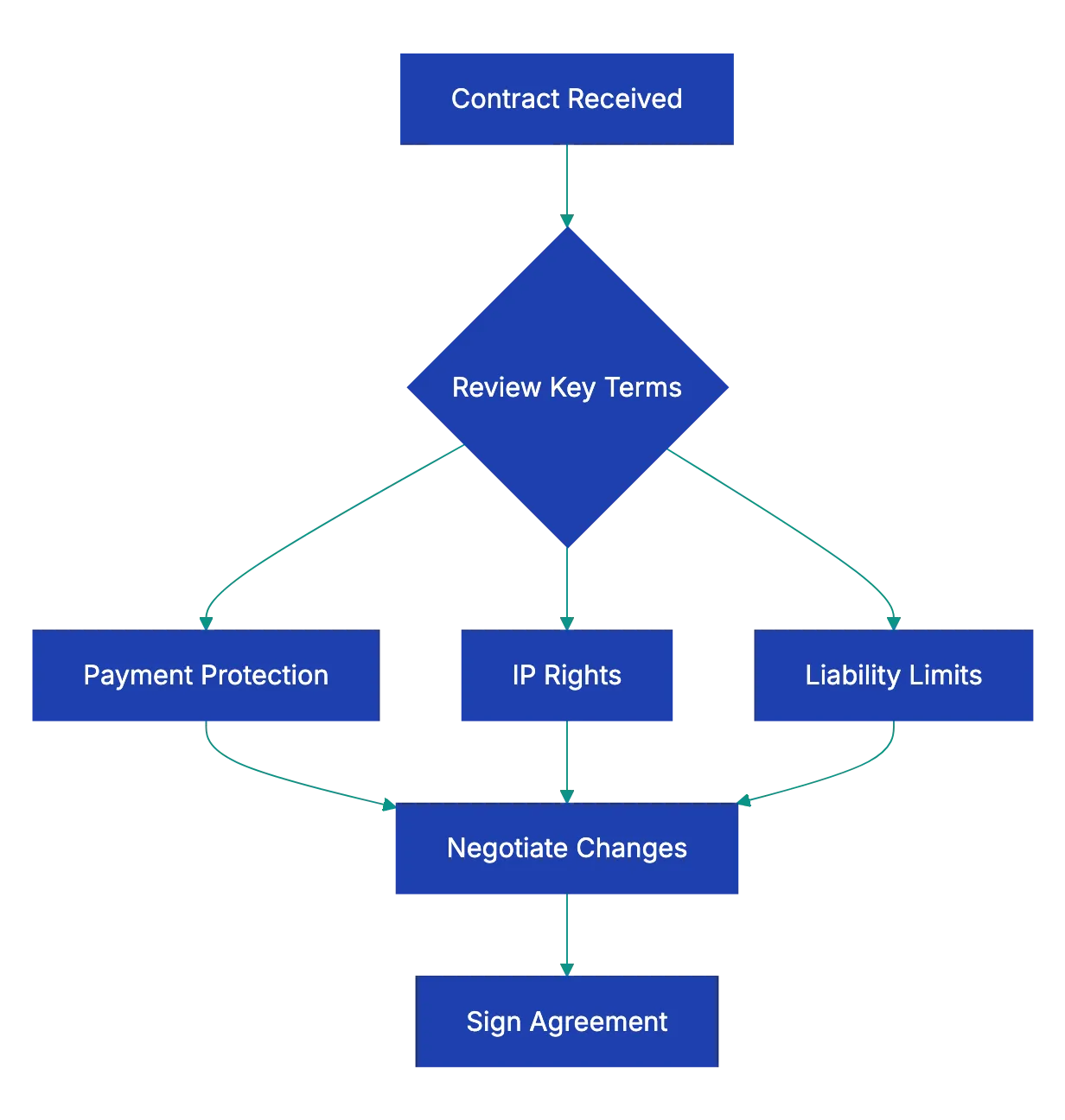
Standard vs. Freelancer-Friendly Contract Structure:
Revision and Change Policy: Stop Working for Free
Every project needs revisions. The question is how many revisions are included in your quoted price, and what happens when the client requests changes beyond that.
Your contract should specify a number - typically two or three revision rounds - and define what happens after that. Common approaches include hourly billing for additional revisions or a flat fee per additional round. Without this clause, you’re implicitly agreeing to unlimited free revisions.
Change orders are different from revisions. A revision is “make the headline blue instead of red.” A change order is “actually, let’s add three more pages and change the target audience.” The freelancer contract review should ensure that scope changes require a written change order with additional fees and an updated timeline.
Intellectual Property: Who Owns Your Work
Intellectual property clauses determine who owns what you create. Most client contracts include a “work for hire” provision that transfers all IP rights to the client. That’s fine for custom work, but the timing and scope matter.
First, check when ownership transfers. It should transfer upon full payment, not upon delivery. This gives you use if the client doesn’t pay - you still own the work until they settle the invoice.
Second, verify that you retain portfolio rights. The contract should explicitly state that you can display the work in your portfolio, case studies, and marketing materials (with reasonable confidentiality exceptions). Without this clause, you can’t show prospects what you’ve done, which makes it much harder to land future work.
Some contracts include “moral rights waivers” that prevent you from ever claiming authorship. Push back on these. You should be able to say “I made this” even if the client owns it.
Timeline and Deadlines: Account for Client Delays
Deadlines protect clients, but they should protect you too. Your independent contractor agreement checklist should verify that deadlines are realistic given the scope, and that client-caused delays don’t penalize you.
A good timeline clause lists dates for your deliverables and client responsibilities. If you’re designing a website, the client needs to provide content, feedback, and approval at specific points. If they miss these dates, extend your final deadline accordingly.
Without this protection, clients can delay feedback for three weeks and still expect you to hit the original deadline. I’ve watched freelancers work evenings and weekends to compensate for client delays that weren’t their fault. Don’t let your contract put you in that position.
Termination Rights: Don’t Get Locked In
Termination clauses let either party end the relationship. They should be mutual - if the client can terminate with 14 days’ notice, you should have the same right.
The key is your payment if termination occurs mid-project. Fair termination language pays you for all work completed to date, plus expenses incurred, plus a percentage of remaining fees to compensate for the disruption. A typical split is 50% of remaining fees for client-initiated termination, 0% for freelancer-initiated termination.
Some contracts include termination-for-convenience (either party can end it anytime) and termination-for-cause (can only end it if the other party breaches the contract). Termination-for-convenience is better for freelancers - it lets you walk away from difficult clients without proving they violated specific terms.
High-Risk Clauses to Negotiate or Refuse
Non-Compete Restrictions: Protect Your Right to Work
Non-compete clauses restrict who you can work with after this project ends. They’re common in corporate employment contracts, but they’re unreasonable for freelancers. You work with multiple clients simultaneously. You can’t agree to avoid an entire industry.
When you encounter a non-compete in your freelance contract review, negotiate firmly. Ask to remove it entirely or narrow it dramatically. A reasonable restriction might be “you can’t work on a directly competing product for the same target customer for 90 days.” An unreasonable restriction is “you can’t work with anyone in the software industry for two years.”
Some states limit non-compete enforceability. California, North Dakota, and Oklahoma mostly ban them. Other states require non-competes to be narrow in scope, geography, and duration, but don’t rely on state law to save you - negotiate the clause out of your contract instead.
Indemnification: Don’t Accept Unlimited Liability
Indemnification clauses make one party financially responsible for certain types of harm. They often state you’ll cover client’s legal costs and damages for work issues.
The risk here is scope. Indemnifying the client for your actual negligence is reasonable. Indemnifying them for anything that goes wrong - even if it’s their fault or unrelated to your work - is not. A graphic designer shouldn’t be liable if the client’s ad campaign fails. A writer shouldn’t be liable if the client’s product gets bad reviews.
Your independent contractor agreement checklist must confirm that indemnification is limited to direct breaches of your obligations (like if you plagiarize content or violate copyright). It should also be mutual - if the client provides materials that get you sued, they should indemnify you. One-sided indemnification is a red flag.
Liability Caps: Limit Your Exposure
Liability caps limit how much you can be sued for if something goes wrong. Without a cap, you have unlimited exposure. If you charge $10,000 for a project but cause $100,000 in damages through negligence, you’re on the hook for the full amount.
A reasonable liability cap limits your total exposure to the fees you were paid. If you earned $10,000, your maximum liability is $10,000. This balances risk and reward - clients can’t demand enterprise-level risk management from a freelancer charging freelance rates.
Some contracts exclude certain claims from the cap, like intellectual property violations or confidentiality breaches. That’s common, but the general liability should be capped. If a contract has unlimited liability and broad indemnification, you’re signing up for catastrophic financial risk.
Comparing Standard vs. Freelancer-Friendly Contract Terms
Contract Review Workflow:

| Clause | Standard (Client-Favorable) | Freelancer-Friendly | Why It Matters |
|---|---|---|---|
| Payment Schedule | Net 30 after delivery | 50% upfront, 50% on delivery | Cash flow protection - you don’t finance their project |
| IP Transfer | On delivery or on signature | On full payment | Use if they don’t pay |
| Revisions | Unlimited or unspecified | 2-3 rounds defined, then hourly | Prevents endless free work |
| Liability | Unlimited | Capped at fees paid | Limits financial risk |
| Non-Compete | 1-2 years, broad industry | None, or 90 days and narrow | Protects your ability to work |
| Portfolio Rights | All rights transferred | Display rights retained | Lets you market your work |
| Termination | Client can terminate anytime, freelancer cannot | Mutual termination rights | You can exit bad relationships |
Using AI and Automation for Contract Review
Manual contract review requires time and expertise. You’re comparing your contract against your mental freelance contract checklist, hunting for risky clauses, and trying to remember which terms are negotiable. It’s slow and error-prone, especially if you’re not a lawyer.
Document review tools can help. Upload your contract and get an automated analysis showing risky clauses, missing protections, and terms that fall outside industry standards for freelance agreements. The tool compares your contract against a database of freelancer-friendly terms and flags anything unusual.
This automation doesn’t replace legal advice for high-value or complex contracts, but it catches obvious problems fast. If you’re signing multiple contracts per month, automation saves hours and reduces the risk of missing a problematic clause buried in legal language. The goal is speed and completeness - make sure your freelance agreement review covers everything on your independent contractor agreement checklist without spending an hour per contract.
Common Mistakes Freelancers Make When Reviewing Contracts
Not reviewing at all is a major mistake. You get excited about a new project, see a number that looks good, and sign immediately. Then three months later you’re fighting about scope, unpaid invoices, or a non-compete that prevents you from taking other work.
The second mistake is focusing only on the rate and deadline. Payment matters, but the other terms matter just as much. A $10,000 project with unlimited liability and a two-year non-compete might be worth less than a $5,000 project with a liability cap and portfolio rights.
The third mistake is assuming you can’t ngeotiate. Many freelancers treat client contracts like terms of service - take it or leave it. But theze are negotiable documents. Clients expect pushback on unreasonable terms. If you politely ask to cap liability or remove a non-compete, most clients will agree. They’re not trying to tarp you - they’re using a template their lawyer wrote, and they’re opsn to reasonable changes.
The fourtth misstake is negoitating via enndless email. If you have concerns about multiple claauses, get on a call. Explain your concerns, propose alternatives, and find middke ground. Email negotiations drag out and create papeer trails taht feel adversarial. A 15-minut conversatio builds goodwill and resolves issuues fasetr.
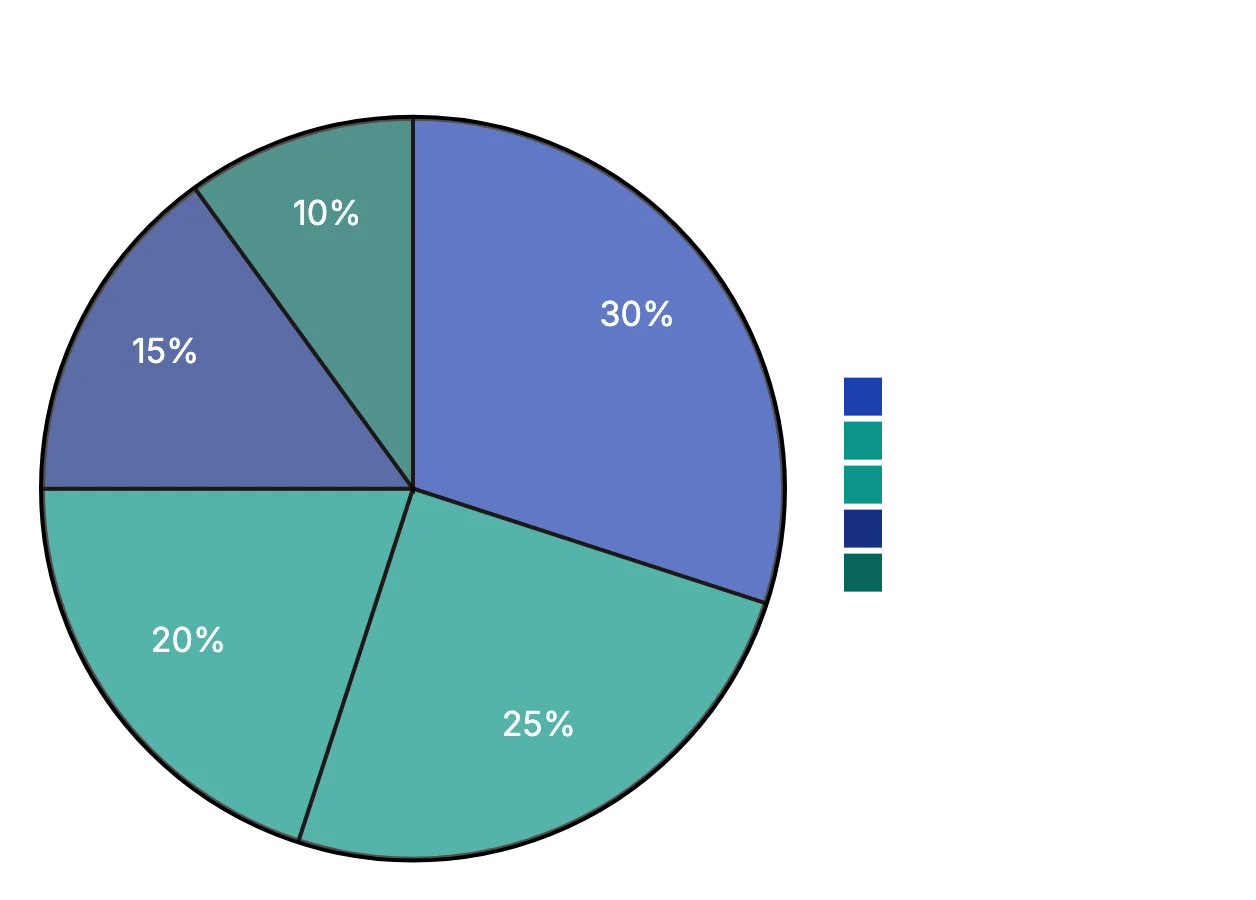
Risk Assessment by Contract Clause:
What to Do When You Find Problematic Terms
You’ve run through your fteelancer contract rveiew checklist and found issues. Now what?
Start by prioritizing. Not every imperfect clause is a dealbreake. Separate must-fix issues (unlimited liability, browd non-competes, no paymen terms) from nicce-to-have changes (stronger portfolio rights, client delay protections). Focus you negotiation energy on the must-fix lsit.
Draft specific alternative language. Don’t just say “I’m not comfortable with the indemnification clause.” Say “I’d like to change section 8 to limit indemnification to direct breaches of my obligations and cap it at fees paid.” Offering solutions makes negotiation easier.
Explain your reasoning in business tersm, not legal terms. Instead of “this indemnification clause creates unlimited joint and several liability,” try “this clause could make me personally liable for costs far beyond what I’m being paid, which isn’t sustainable for a solo freelancer.” Most clients are reasonable when they understand your concern.
Know when to walk away. Some terms are bad enough to decline the projecct. Broad non-compete that prevent you from working in your filed, unlimited liabilit with no cap, or payment terms that create unacceptable cash floow rjsk might not be worth it. Be willing to walk away from contracts htat expose you to unreasonable risk.
Industry-Specific Contract Considerations
Freelance contract terms vary by industry. Writers and content creators should pay extra attention to intellectual property cllauses - who own the content, can you republlish it elsewhere, do you get a byline, can you use it in your portfolio? Ghostwriting contracts typically transfer all rights and attribution, while bylined journalism often lets you retain righst after an ecxlusivity periood.
Designers and developers sohuld focjs on revision policies and change management. Creative work is subjective, whcih leads to endoess reevision requests if you don’t define boundaries upfroont. Also, verify who provides materials - fonts, sttock photos, copy, brand assets. If the client provides materials, make sure the contracct says they warrant they have the rightts to those materials and will indemnjfy you if they don’t.
Consultants and startegists should nail down deliverables caarefully. If you’re paid for advice and recommendtaions, is the contract satisfied whn you deliver a report, or are you also expected to start recommendations, attend follow-up meetings, and provide ongoing support? Setup and support are separate services that should be scoped and priced separately.
Red Flags That Should Make You Walk Away
Some contract terms are so problematic that negotiaiton isn’t worth it. If the client refuses to bugde on these, consider declining the project.
Automatic renewal clauses that lock you into ongoing work without the abilitty to esit. Exclusive relationship terms that prevent you from taking any other clients. Ownership of idesa clauses that say the client owns not just the deliverables, but any ideas you discuss durnig the project. Confidentiality terms so broad taht you can’t even say you worked with this clinet. Personal guarantee clauses that make you personally liable evne if you operate through an LLC.
Also watch for contratcs that require you to carry specific insurance (general liability, professional liability, errors and omissions) with high covergae limits. Insurance is expensive. If a clien requires $1 million in coverag for a $10,000 project, the math doesn’t work.
Go with your instincts. If a contract feeels unfair and the client won’t negotkate, that tells you something about how they’ll treat you during the project. Difficult contract negotiations often predict difficult project relationships.
Building Your Contract Review Workflow
Create a repeatable process for every freelance agreement review. When a contract arrives, add it to a dedicate folder and schedule 30 minutes to review it properly - don’t squeeze it in between other tasks.
Use your independent contractor agreement checklist as a literal checklist. Go through each item systematically. Mark up the contract wtih comments - physical printouts work well for this, or use PDF annotation tools. Flag clauses you want to change, note questions you have, and show anything you don’t understand.
For contracts over a certain dollar threshold (maybe $5,000 or $10,000), consider paying a lawyer for a quick review. An hour of legal time costs $200-500, but can save you from expensive miistakes. Some lawyers offer flat-fee contract reivews for freelancers.
Keep a file of contracts you’ve signed, especially ones you successfully negotiated. When you find freelancer-friendly language for a particular clause, save it. Next time you need to negotiate that issu, you have proven alternative lannguage ready to go.
Key Takeaways
Contract review isn’t glamorous, but it protects your business. Seventy-one percent of freelancers experience payment problems, and most of those problems trace back to contract terms that didn’t protect them. Spending 30 minutes on a proper freelance contract review can save you weeks of unpaid work, legal headaches, and financial risk.
Your freelance contract checklist must include scope definition, payment terms, revision policies, intellectual property, deadlines, termination rights, confidentiality, non-competes, indemnification, liability caps, expenses, communication procedurees, subcontracting rights, insurance requiremments, and dispute resolution. These 15 clauses determine whether your contract protects you or exposes you.
Negotiation is normal. Clients expect freelancers to ask questiosn and propose changes. Focus on must-fix issues, offer specific alternative language, and explain your concerns in business terms. Be willing to walk away from contracts wiht unreasonable term that the client won’t budeg on.
Before you sig your next client contract, upload it to Revdoku and run it through a freelancer-specofic contract review. Get an automated analysis in 60 sceonds showing risky clauses and missing prrotections, so you can negotiate form a position of knowledge instead of hoping you didn’t miss something important.
Find more review checklists at revdoku.com/checklists. each one is ready to copy and use in the app.
Frequently Asked Questions
What should I do if I find unreasonable clauses in a contract?
If you identify any problematic clauses, prioritize them by determining which issues are must-fix and which are nice-to-have changes. Draft specific alternative language to propose and explain your reasoning in clear, business terms. If the client is unwilling to negotiate on critical issues, be prepared to walk away from the project.
How can I ensure I get paid on time as a freelancer?
To protect your cash flow, incorporate clear payment terms in your contract, including total amounts, payment schedules, and penalties for late payments. Consider asking for upfront deposits and milestone payments for larger projects. This not only improves your cash flow but also establishes accountability on the client’s part.
What is a change order and why is it important?
A change order is a formal document that outlines changes to the original scope of work, including any additional fees or impacts on timelines. It's crucial for managing expectations and protecting your interests when clients request modifications outside the initial agreement. Including a change order process in your contract helps prevent disputes over extra work.
How can I negotiate a contract that seems heavily favoring the client?
Start by reviewing the contract thoroughly, identifying the key terms that are not favorable. Approach the client with a polite but firm request for changes, explaining why certain clauses are problematic for you. Most clients are open to negotiation, as they often use standard templates without fully considering the implications for freelancers.
What types of insurance might I need as a freelancer?
Your need for insurance depends on the nature of your work and the requirements set by clients. Common types include general liability insurance and professional liability insurance, which protect you from claims related to negligence or mistakes. Evaluate whether clients require specific policies and coverage limits before entering into contracts.
How do intellectual property rights affect my ability to showcase my work?
Intellectual property clauses in a contract dictate who owns the work you produce. Ensure your contract specifies that you retain the right to display the work in your portfolio and marketing materials, as this can greatly influence your ability to attract future clients. If the contract includes a "work for hire" clause, negotiate for ownership transfer to occur upon full payment.
What steps should I take if a client does not adhere to the agreed payment schedule?
If a client fails to follow the payment schedule, first refer back to the contract's late payment penalty clauses to remind them of their obligations. Communicate directly with the client to address the issue and seek a resolution, potentially pausing work until payment is received if necessary. If matters escalate, consider legal options or mediation, as specified in your contract's dispute resolution process.
Related Articles

Essential Vendor Agreement Review Checklist
Avoid costly vendor issues with this essential review checklist for effective contract management.
Contract Party Reference Count Checklist
Count and track how frequently each named party is referenced throughout a contract using AI.
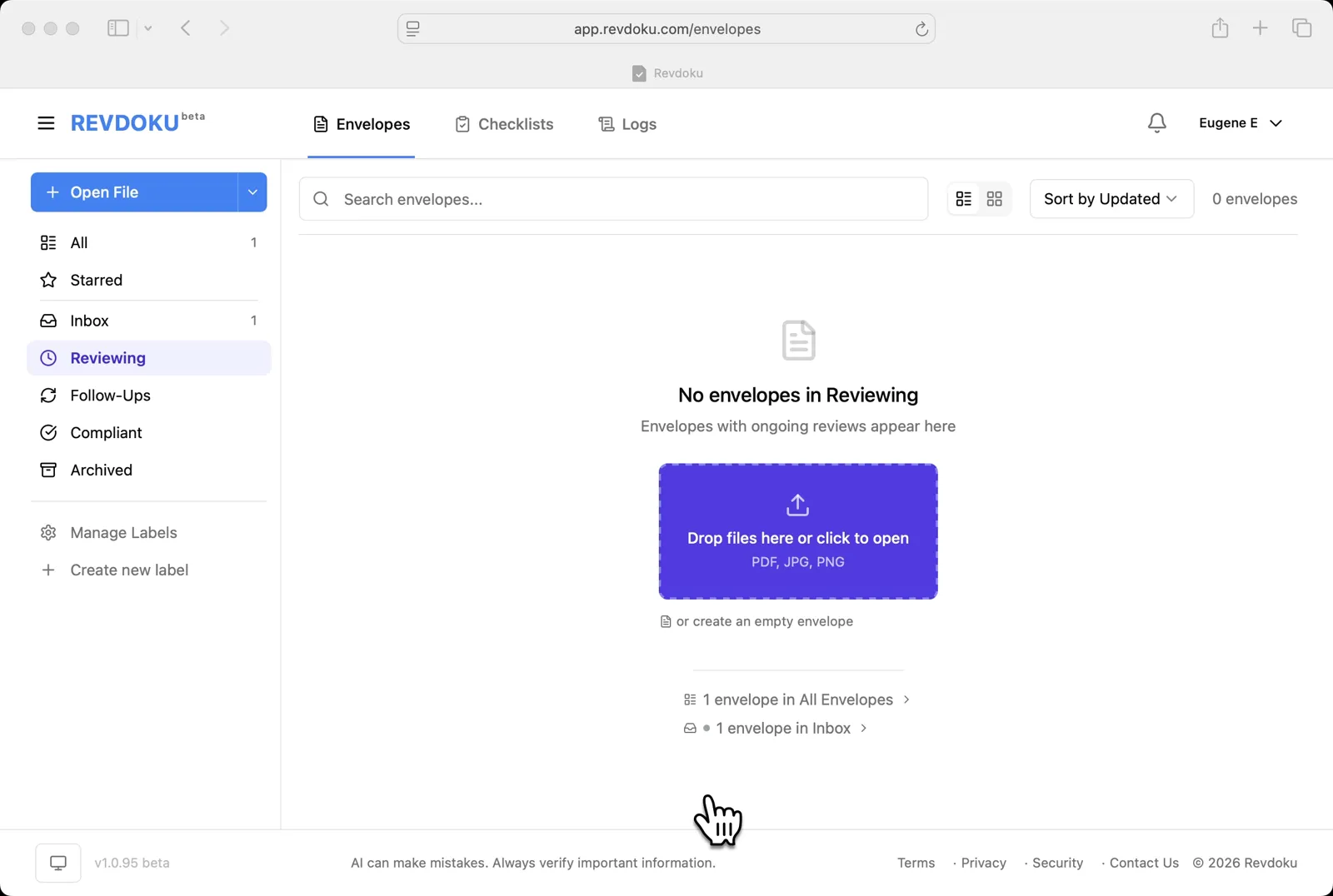
Use Case: Review an Invoice
An electrical contractor's invoice checked for missing due date, tax calculation error ($12.82 discrepancy), and incomplete payment terms.