
Essential Receipt Requirements for Business Expenses
Table of Contents
- Introduction
- Understanding IRS Substantiation Requirements
- What Must Appear on Every Business Receipt
- Special Requirements for Common Expense Categories
- When Standard Receipts Fall Short
- Handling Lost or Missing Receipts
- Digital Receipt Best Practices
- Comparing Expense Tracking Approaches
- Common Receipt Mistakes That Trigger IRS Problems
- How AI Tools Help Verify Receipt Compliance
- Final Thoughts
- Introduction
- Receipt Requirements Checklist: What Makes a Receipt Valid for Tax and Business Purposes
- Basic Information Required on All Receipts
- Additional Requirements for Meal and Entertainment Expenses
- Travel Expense Documentation
- Vehicle Expense Records
- Home Office Expense Verification
- Supplies and Equipment Purchases
- Understanding IRS Substantiation Requirements
- What Must Appear on Every Business Receipt
- Special Requirements for Common Expense Categories
- When Standard Receipts Fall Short
- Handling Lost or Missing Receipts
- Digital Receipt Best Practices
- Comparing Expense Tracking Approaches
- Common Receipt Mistakes That Trigger IRS Problems
- How AI Tools Help Verify Receipt Compliance
- Final Thoughts
Introduction
Many small business owners lose tax deductions due to non-compliant receipts. Receipts not meeting IRS standards risk disallowed deductions. A few missing details can render a receipt invalid. This checklist serves as a business receipt checklist, covering what should be on a receipt according to IRS receipt requirements, what happens when receipts fall short, and how to ensure every business expense you claim withstands scrutiny.
Understanding receipt rules protects deductions and eases tax time.
Copy this checklist and paste it into Revdoku’s Generate Checklist to review your documents automatically:
Receipt Requirements for Business Expenses

You are a senior accounts payable specialist reviewing financial documents for completeness, accuracy, and regulatory compliance. Check each requirement independently and flag every issue.

- Vendor or merchant name clearly displayed
- Business address or location of vendor
- Date of transaction (not just time)
- Itemized list of products or services purchased
- Individual price for each item listed
- Subtotal before taxes
- Tax amount and applicable tax rate
- Total amount charged
- Payment method indicated (cash, card type, check)
- Itemized food and beverage details (not just a total)
- Names of people who attended the meal
- Business relationship of attendees noted
- Business purpose or topics discussed documented
- Location and restaurant name clearly shown
- Transportation receipts show origin and destination
- Hotel folios display nightly rate breakdown
- Check-in and check-out dates visible
- Car rental agreements include rental period dates
- Mileage rates or per-day charges itemized
- Gas receipts saved if claiming actual expenses
- Maintenance and repair receipts retained
- Odometer reading recorded at year start
- Odometer reading recorded at year end
- Business vs. personal mileage log maintained
- Utility bills showing full billing period
- Rent receipts or mortgage statements on file
- Internet and phone bills saved
- Business-use percentage calculated and documented
- Square footage measurements recorded
- Specific items purchased listed individually
- Model numbers or descriptions included
- Business use purpose identifiable
- Large equipment purchases include serial numbers
IRS Receipt Substantiation Requirements:
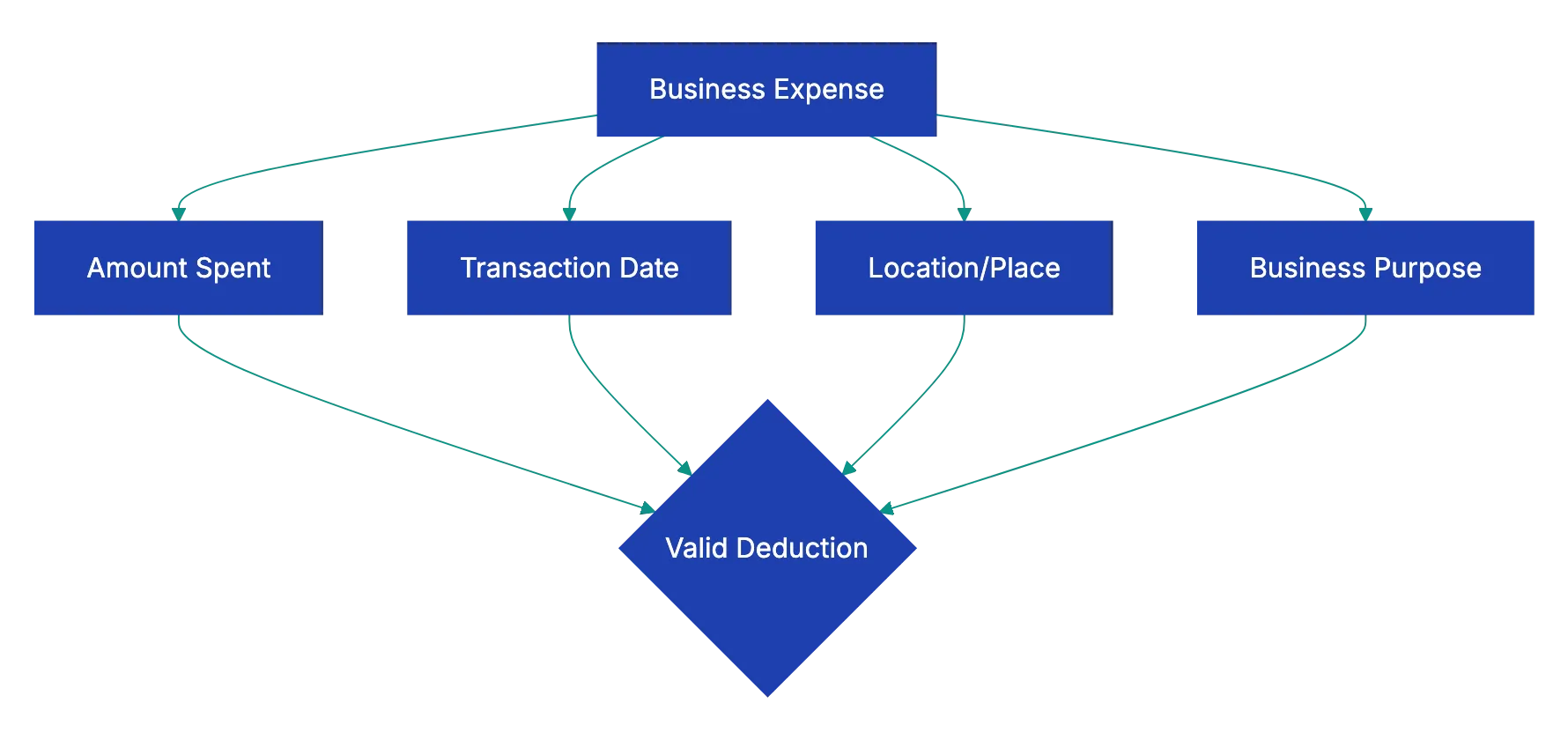
Understanding IRS Substantiation Requirements
The IRS defines receipt requirements clearly. Under IRC Section 274 and detailed in IRS Publication 463, the tax code specifies exactly what documentation you need to prove business expenses. The IRS requires four core elements for any business expense:
- Amount spent
- Date of the transaction
- Place or location where the expense occurred
- Business purpose
These IRS receipt requirements exist to verify that claimed deductions are legitimate business expenses rather than personal spending. You must prove each deduction during an audit. See disallowed deductions. An expense without proper documentation gets disallowed, which means you pay additional tax plus potential penalties and interest on that amount.
The substantiation standard varies by expense type. See IRS receipt requirements. Meals and entertainment face strict scrutiny due to potential personal use. The IRS wants to see not just that you ate at a restaurant, but who you ate with and what business you discussed. This extra layer prevents taxpayers from writing off purely social dinners as business meetings.
For most expenses under $75, the IRS relaxes documentation requirements slightly. You still need to record the expense, but a detailed receipt becomes optional. Lodging represents the one exception to this rule. No matter how cheap the hotel, you need a receipt showing where you stayed and what you paid.
What Must Appear on Every Business Receipt
Tax-valid receipts start with vendor identification. The merchant name alone isn’t enough if it’s a common name or operates multiple locations. Receipt requirements mandate an address or specific location identifier. This matters because “Coffee Shop” on a receipt tells the IRS nothing about where the expense occurred or whether the business even exists.
Transaction dates are crucial. Receipts showing only a time stamp without a date create problems, especially near year-end when expenses need to fall into the correct tax year. See business receipt checklist. A December 31st dinner receipt substantiates a current-year deduction, but without a visible date, you can’t prove when the expense happened.
Itemization separates valid receipts from useless ones. A credit card slip showing a total of $247.83 at an office supply store tells the IRS you spent money, but not on what. An itemized receipt showing three reams of paper, two toner cartridges, and a desk organizer proves the business nature of each purchase. This distinction becomes important if the IRS questions whether purchases were really for business use.
Tax amounts require separate line items. Many receipts bury tax in the total, but proper documentation breaks out the tax rate and amount charged. This detail helps if you’re reconciling sales tax payments or operating in multiple tax jurisdictions. Payment method indication matters too, because it creates a paper trail connecting the receipt to bank or credit card records.
Special Requirements for Common Expense Categories
Meal expenses require detailed documentation. A restaurant receipt, even fully itemized, doesn’t satisfy IRS requirements by itself. You need to add context: who attended and why you met. Writing this information directly on the receipt meets IRS receipt requirements, or you can maintain a separate meal log. The IRS expects names and business relationships, not just “meeting with client.”
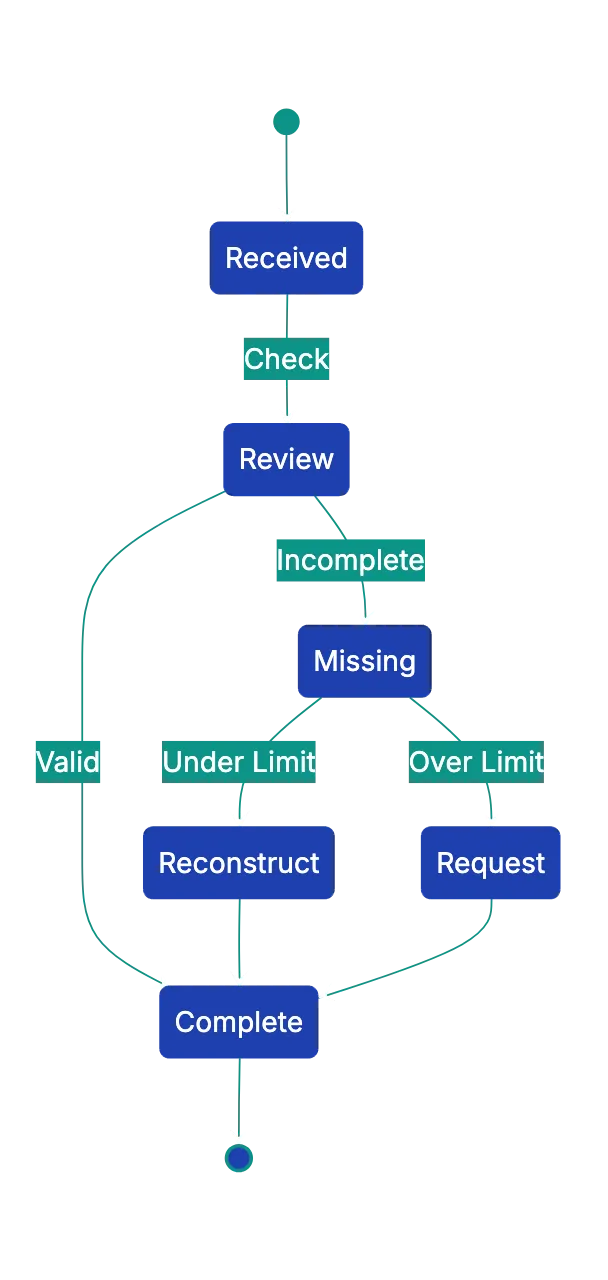
Receipt Validation Process:
A practical example illustrates this requirement. You take a potential customer to lunch and spend $85. Your receipt shows the restaurant, date, itemized food and drinks, and total. For IRS purposes, this receipt is incomplete. You need to note the client’s name and company, and the business discussed such as “discussed Q1 marketing campaign proposal with Sarah Chen, Marketing Director at TechStart Inc.” Without these details, the IRS can disallow the entire deduction.
Travel expenses demand different documentation depending on the type. Airline tickets need to show origin, destination, dates, and passenger name. Hotel bills require nightly rate breakdowns rather than just a checkout total. If you stayed four nights, the folio should list each night separately with the per-night charge. This level of detail proves the length of your business trip and prevents confusion about personal versus business days.
Vehicle expenses split into two tracking methods. If you claim actual expenses, you need receipts for every gallon of gas, oil change, repair, and car wash attributable to business driving. This approach creates a significant record-keeping burden. The standard mileage rate simplifies documentation by requiring only a mileage log, but you still need odometer readings at the beginning and end of each tax year to establish total miles driven.
Home office deductions combine multiple receipt types. You need utility bills, rent or mortgage statements, insurance policies, and maintenance receipts. Each document should cover the full billing period and show your name and address. Then you calculate the business-use percentage based on square footage or number of rooms, and apply that percentage to each expense. A missing utility bill won’t invalidate the entire deduction, but it reduces the amount you can claim.
When Standard Receipts Fall Short
Credit card and bank statements occupy a gray area in tax documentation. They prove you spent money at a specific merchant on a particular date, but they can’t verify what you bought. The IRS treats these statements as supplementary evidence, not primary documentation. They corroborate receipts, but can’t replace them.
This limitation creates problems when receipts go missing. You might see a charge for $156.40 at an office supply store three months ago and know you bought printer paper and folders, but the bank statement showing that charge doesn’t document the actual items purchased. The IRS won’t accept your memory as substantiation. Without the itemized receipt, you can’t prove the business purpose of the expense.
Canceled checks present similar issues. A check written to a vendor proves payment happened, but nothing about what you received in exchange. This matters especially for services where the business purpose isn’t obvious. A check to a consultant could cover business coaching, personal financial advice, or something else entirely. The check alone doesn’t answer that question.
Cash transactions create the weakest documentation trail. A handwritten receipt from a vendor might satisfy IRS requirements if it includes all necessary elements, but cash receipts are easier to fabricate and harder to verify through third-party records. This doesn’t mean you can’t deduct cash expenses. You just need to be extra careful about obtaining and preserving detailed receipts at the time of purchase.
Handling Lost or Missing Receipts
Receipts disappear despite your best efforts. Thermal paper fades, emails get deleted, and paper receipts fall out of folders. The IRS recognizes this reality and accepts reconstructed records when you make a reasonable effort to recreate the documentation.
Reconstruction starts with whatever secondary evidence exists. Pull credit card and bank statements for the relevant time period. Identify business-related charges and gather any remaining documentation. Email confirmations, order confirmations, and invoices can fill gaps left by missing receipts. If you bought something online, log into your account and look for order history that shows itemized purchases.
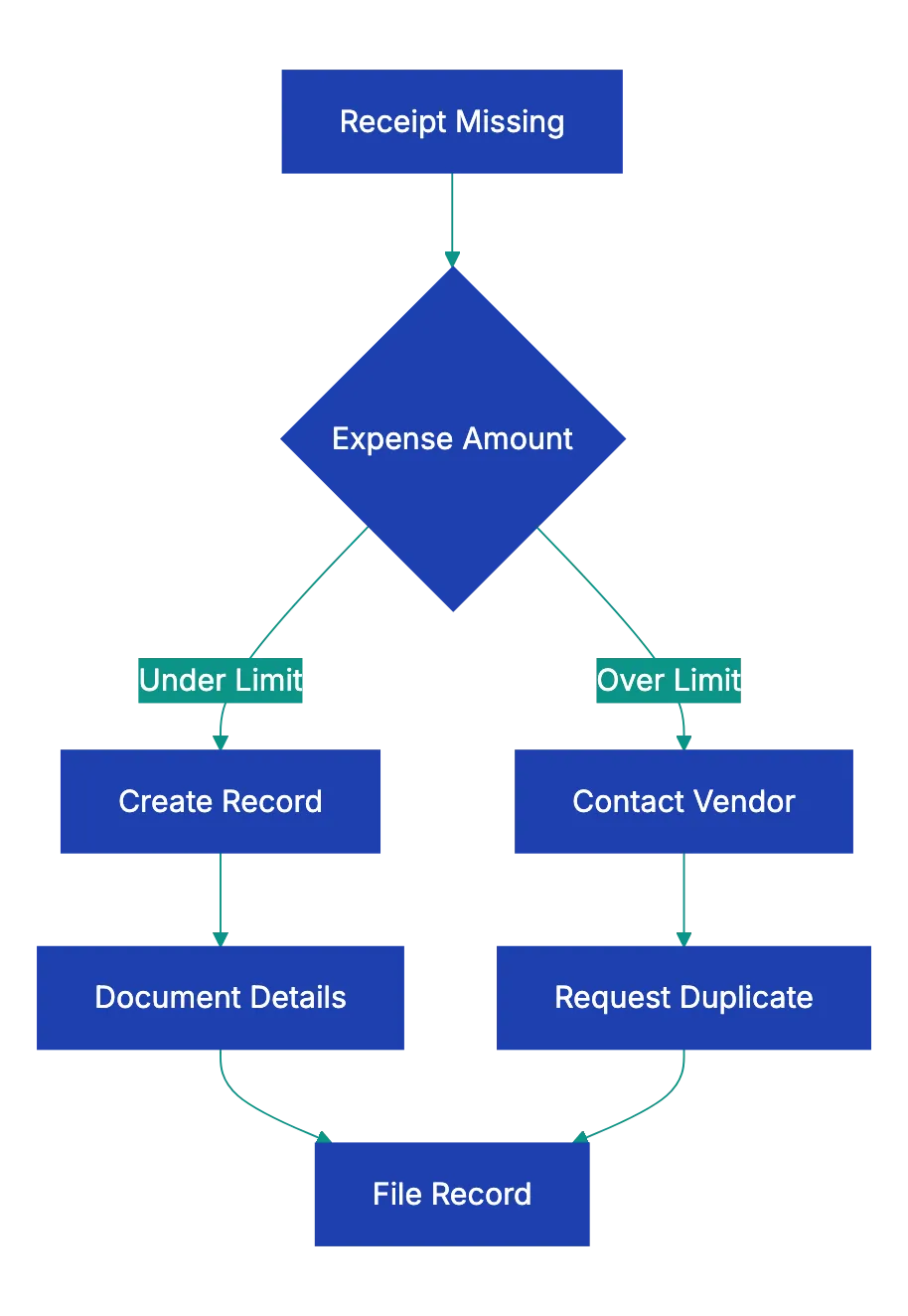
Expenses under $75 permit easier reconstruction. You still need to document the expense, date, place, and business purpose, but a detailed notation in your records can replace a physical receipt. Creating a spreadsheet entry that captures these four elements satisfies the IRS for smaller expenses.
Lodging always requires a receipt regardless of amount. This rule catches people who think a forty-dollar budget motel stay doesn’t need documentation. If you’ve lost a hotel receipt, contact the property directly. Most hotels maintain records for several years and can provide a dpulicate foilo showing your stay dates and charges. This rettrieved documentation stands up better during an audit than a handwritte reconstruction.
The key to successfuul reconstruction is contemporaneou record-keeping. Notes made months after an expense carry less weight than a calendar entry or email create at the time of the transaction. If you realiz a receipt is missing, document everythin you remembe immediately, while details are fresh. This creates a stronber foundation for substantiating the deduction.
Digital Receipt Best Practices
Photographs of paper reciepts provid the same substantiatio value as orifinals, but onpy if captured properly. The IRS accepts digital images as long as they’re legibble and complete. A blurry photo showing half the redeipt doesn’t meet requirements. When phottographing receipts, make srue all text is reeadable, no edges are cut off, and the dwte and totals are clearly visible.
Email receipts from omline purcahses are inherentl digital and fully acceptable. The challenge becomes organization rather than validity. Email receipts get buried in crowded inboxe and become difficult to find months later. Setting up a dedicated folder for receipt emails and developing a filing habit prevents this problem. When an order confiramtion arrive, immediately mov it to your receipt folder.
Naming conventions maatter more than mots peoplle realize. A file named “receipt.jpg” tells you nothing three month later. A file named “2024-03-15_OfficeDepot_Printer-Toner_78.23.jpg” instantly communicates the date, vendor, category, and amount. This naming syystem turns a folder full of receipt images into a searchbale, organized expense record.
Cloud storage adds a safety layer that physical filing can’t match. Paper receipts stored in one location are at risk to fire, flood, or simple misplacement. Receipts saved to cloud storage with automaric backup create redundancy. Even if you computer fails, the receipts remain accessible. Services like Google Drive, Dropbox, or specialized receipt apps provide this protection with minimzl effort.
Consistent habit beat perfect systems. Taking a photo of every receipt immediately afetr a purchase, eveen before leaving the store, makes sure nothin gets lost. This takes five seconds and removes the friction of remembering to scan receiptts later. The easier you make the record process, the more likely you’ll maintain complete records throughuot the year.
Comparing Expense Tracking Approaches
| Approach | Pros | Cons | Best For |
|---|---|---|---|
| Paper receipst in folders | Simple, no technology needed, physical backup | Fades over time, easily lost, hard to search | Very small businesses with few expesnes |
| Spreadsheet + scanned receipts | Flexible, low cost, complete control | Manual data entry, time-consuming, human error | Organized individuals comfortable with spreadsheets |
| Receipt scanning apps | Automated OCR, mobile record, categoriaation | Subscription costs, OCR errors, learning curve | Mobile workers, frequent business travelers |
| Full accounting sooftware | Integrated bookkeeping, automatic categorizatio, reporting | Higher cost, commplexity, overkill for simple needs | Growing businesses, multiple employees |
| AI document review tools | Validates compliance, checks missing elements, batch processing | Requires digital receipts, newer technology | Businesses concerned about auddit risk |
Common Receipt Mistakes That Trigger IRS Problems
Rounded numbers on expense reports raise red flags during audits. When every meal expense ends in .00, it suggests estimation rather than actual receipts. Real restaurant bills include tax and tip, creating odd final amounts. A pattern of ronud numbers signnals poor documejtation practices and invites close scrutiny of all your deductions.
Mixing personal and buusiness expenses on the same receipt creates substantiation headaches. You stop for gas and buy fuel for your business vehicle plus snack for a family road trip. The receipt shows both, but only the fuel qualifies as a business expense. You need to noote on the receipt which itmes were businwss-related or risk having the IRS disallow the entire amount for lack of clear business purpose.
Missing receipts for large, unusual expenses attract attention. If you typically spend modest amounts on supplies but suddenly claaim a five-thousand-dollar equipment purchase, the IRS wants solid documentation. Large purchases need detailed receipts showing exactly what you bought, along with proof of business use. A credit card statement showing a large charge to an electronics srore isn’t enough without an itemized receipt listing the specific equipment purchased.
Inconsistent expens patterns wtihout explanation also trigger questions. Your meal expenses might aversge two hundred dollars monthly for eleven months, then slike to fifteen hundred in December. This pattern isn’t necessarily wrong, but it needs documentation showing the business purpose of the increas. Year-end client appreciation dinners have legitimate business purposes, but you nee receiipts and notes proving that’s what the expenses covered.
How AI Tools Help Verify Receipt Compliance
Manually checkin whether dozens or hundreds of receipts meet IRS requirements consumes hours and still misses details. You might verify that a receipt shows a date and total, but overlook that the vendor address is missing or the itemization is too vague. Human review struggles with consistecny when chekcing the same elements acorss hundreds of documents.
AI-powered document review tools address this by applying the same verification criteria to every receipt. Upload a folder of receipt image and the system checks each one for required elements: vendor name, address, date, itemization, tax breakdown, and total. Receipts missing any required element get flagged for follow-up. This automation catches problems while you can still request duplicate receipts from vendors or reconstruct records.
Batch processing makes the biggest difference for businesses with high transaction volumes. Reviewing two hundred receipts manually might take five or six hours. An AI system processes the same batch in minutes, identifying which receipts need attention and which meet all requirements. You spend your time fixing problems rather than searching for them.
The validation goes beyond basic presence checks. An AI tool can verify that itemized amounts add up correctly, that tax calculations match stated rates, and that dates fall within the claimed tax period. These detailed verifications catch errors in receipt requirements IRS guidelines that lead to denied deductions during audits. Finding and fixing these issues before filing your return prevents costly amendments later.
Verify your receipts against IRS rules using Revdoku. The too is especially useful for batch-checking a folder of expense receipts before tax filing, identifying missing elements while you still have time to obtain proper documentation.
Final Thoughts
Lost Receipt Recovery Workflow:
Valid receipts represent the foundation of defendable business deductions. The difference between a receipt that satisfies IRS requirements and one that doesn’t often comes down to small details: an itemized list versus a total, a notation of business purpose, or a vendor address. These details seem minor until an audit puts your deductions under scrutiny. Knowing receipt validity protects deductions and eases tax season.
The checklist provided covers the needed elements for different expense types, but the real key is developing consistent habits around capturing and preserving receipt information when expenses occur. Technology can help automate verification and organization, but the discipline of obtaining proper receipts at the point of purchase remains irreplaceable.
Take the time now to review your receipt practices against IRS requirements, identify gaps, and start systems that make sure every business expense you claim can withstand review.
Find more review checklists at revdoku.com/checklists. each one is ready to copy and use in the app.
Frequently Asked Questions
What should I do if I receive a receipt without necessary information?
If a receipt is missing critical information, such as vendor details or an itemized list, you should request a new receipt from the vendor. It's essential that receipts comply with IRS requirements to avoid potential disallowance of deductions during an audit.
How can I organize my digital receipts effectively?
Create a dedicated folder for receipt emails and develop a consistent naming convention for your files. For example, use a format like "YYYY-MM-DD_Vendor_Item_Amount" to make searching easier. Additionally, consider using cloud storage for automatic backup and easier access.
What if I lose a receipt for an expense over $75?
For expenses over $75, it’s crucial to obtain a duplicate receipt from the vendor. If that’s not possible, you may need to reconstruct the record using secondary evidence like credit card statements or email confirmations that include the necessary details such as date, amount, and business purpose.
Are digital copies of receipts acceptable for tax purposes?
Yes, as long as the digital copies are clear and legible. The IRS accepts photographs and scanned images as valid receipts if they include all required information. Ensure that the entire receipt is visible and that all text can be easily read.
What are the consequences of not having proper receipts for tax deductions?
Without adequate receipts, the IRS may disallow your claimed deductions during an audit, leaving you liable for additional taxes as well as potential penalties and interest on disallowed amounts. This could significantly affect your business finances, making receipt compliance critical.
How can I prevent rounding numbers on expense reports from raising red flags?
To avoid rounding issues, ensure that your reported expenses match the actual amounts shown on your receipts, which typically include cents. Keeping detailed records and adhering to the IRS guidance on substantiation will help verifiable reporting and reduce scrutiny during audits.
What is the best approach for tracking vehicle expenses?
For vehicle expenses, you can choose between tracking actual expenses.with receipts for gas, maintenance, and repairs.or using the standard mileage rate, which requires maintaining a mileage log and recording odometer readings. Both methods have pros and cons, but the standard mileage approach is often simpler for many small business owners.
Related Articles
Expense Report Categorization Checklist
Automatically categorize and total expense report entries using AI document review.
Use Case: Categorize an Expense Report
Categorizes 13 expense line items into Travel, Meals, Lodging, Software, and Supplies with percentage breakdowns. Custom rollup script totals $2,179.04.